
Should I Study Aerospace Engineering or a Related Major?
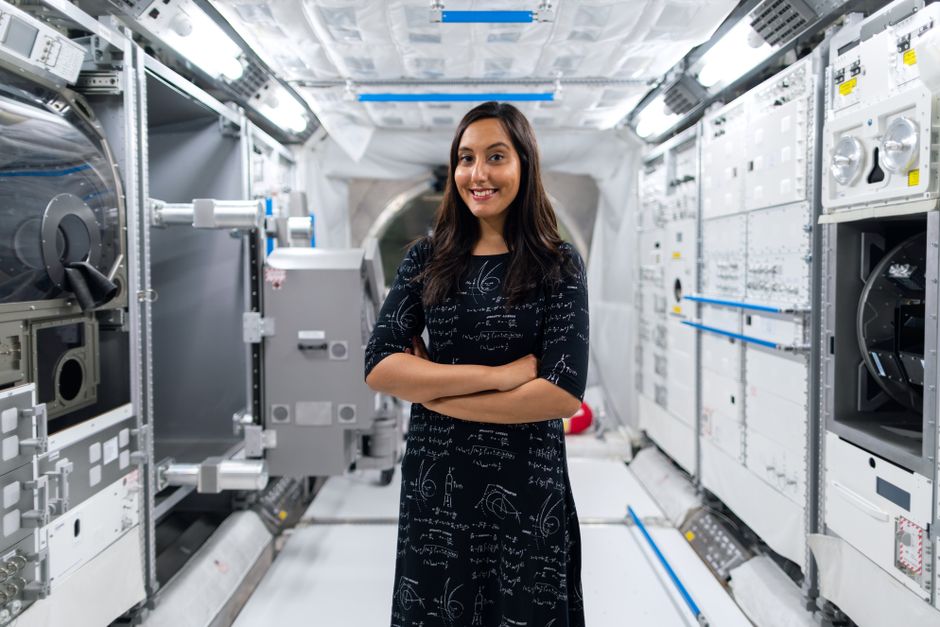
Study aerospace engineering if you want coursework centered on flight, spacecraft, propulsion, and controls; choose mechanical, electrical, or computer engineering if you want a broader degree while still qualifying for many aerospace roles. The better route is the one that matches the systems you want to build and lets you produce strong project, internship, and coursework evidence for that work.
Start with the job function, not the label on the diploma. The U.S. Bureau of Labor Statistics says aerospace engineers typically need a bachelor's degree in aerospace engineering or a related field. That wording matters: aerospace is a destination with many technical entry lanes, not a single-major gate.
Can I get an aerospace job with a mechanical engineering degree?
Yes. A mechanical engineering degree can lead to aerospace work because aerospace hardware needs people who can design, develop, build, and test mechanical and thermal devices.
According to the Bureau of Labor Statistics, mechanical engineering is one of the broadest engineering fields, with work that includes computer-aided design, simulations, test analysis, prototype development, and manufacturing oversight. Those are not side tasks in aerospace. They are the work behind structures, mechanisms, thermal systems, manufacturing, and propulsion-adjacent hardware.
The practical move is to make your mechanical path legible. Do not simply say, "I am interested in space." Say, "I designed and tested a mechanism," or "I ran thermal or structural analysis and documented the result." The first sentence creates cognitive load for the reviewer. The second gives them a technical function they can place.
| Degree route | Common aerospace function | Evidence to build while studying |
|---|---|---|
| Aerospace engineering | Flight vehicles, spacecraft, propulsion, guidance and control | Vehicle, propulsion, structures, or controls coursework and tested designs |
| Mechanical engineering | Structures, mechanisms, thermal systems, testing, manufacturing | CAD, simulation, prototype, test-analysis, and manufacturing work |
| Electrical engineering | Avionics, sensors, communications, power systems | Electrical or electronic system design and test work |
| Computer engineering or related computing route | Software, embedded systems, technical computing | Software or hardware projects tied to a defined exploration problem |
Mechanical engineering also preserves a wider fallback market. BLS reported about 298,500 mechanical-engineer jobs in 2025 and projected 17,800 openings per year on average from 2025 to 2035, compared with 68,700 aerospace-engineer jobs and about 3,800 annual openings. That does not make mechanical automatically better. It makes the trade-off visible.
Use the broad degree deliberately. Take aerospace-relevant electives where available, join a technical team, and target internships where the work matches the subsystem you want. Budgeting for a project team or an internship search also benefits from the same cash-reserve discipline covered in How Can I Keep My Emergency Fund Safe and Accessible in a High-Yield Savings Account?.
Is an aerospace engineering degree better than mechanical engineering?
Aerospace engineering is better when you want early, concentrated exposure to aerospace systems; mechanical engineering is better when you want the same core hardware foundation with a broader set of industries open to you.
The specialized degree has a real advantage when your target work is already clear. BLS lists aerospace specializations including aerodynamic fluid flow, structural design, guidance, navigation and control, instrumentation and communication, robotics, and propulsion and combustion. If you know you want to spend college learning how aircraft or spacecraft systems behave, aerospace puts more of that material in your required path.
But specialization is not proof of readiness. Use the function-first test: write the job function you want, then list the courses and artifacts that prove you can do it. Weak version: "Aerospace major seeking opportunities." Strong version: "Student focused on structures, with a tested design and documented analysis." The second version gives an internship reviewer something to evaluate.
The labor data also argue against treating degree names as a ranking. BLS projects 8% growth for aerospace engineers from 2025 to 2035, with a 2025 median annual wage of $134,960. It projects 11% growth for mechanical engineers over the same period, with a 2025 median annual wage of $104,110. These are occupational figures, not promises that any particular degree will produce a particular job or salary.
There is one constraint you should check early: eligibility. BLS notes that aerospace engineers working on national-defense projects may need security clearances, and some clearances require U.S. citizenship. Department of State guidance also says some space-related technologies are controlled under the U.S. Munitions List. This is not a universal ban on aerospace work. It is a role-specific filter, so read each internship and job posting before building your plan around it.
Which engineering majors can work in the space industry?
Aerospace, mechanical, electrical, and computer engineering can all lead to space-industry work because the industry needs complete systems, not only vehicle specialists.
The Bureau of Economic Analysis reported that the U.S. private-sector space economy employed more than 373,000 workers in 2023. In its 2022 workforce analysis, architecture and engineering occupations represented 12.7% of the space workforce and computer and mathematical occupations represented 12.0%. Aerospace engineers were not the most prevalent engineering occupation: industrial engineers accounted for 2.0% of the workforce, compared with 1.1% for aerospace engineers.
Electrical engineering is a direct route when you are drawn to avionics, communications, sensors, or power. The BLS description of electrical and electronics engineers centers on designing, developing, and testing electrical and electronic equipment, components, and systems. Computer-oriented routes matter too: BEA found software developers were the single largest occupation in the space workforce in 2022.
Turn that fact into a weekly drill. Pick one technical lane. Build one project with a requirement, a design decision, a test, and a result. Then write a four-sentence project summary: the problem, your subsystem, how you tested it, and what you would change next. That is a portfolio signal, not just a club attendance line.
NASA offers concrete project models. Its Student Launch challenge has teams design, build, test, and launch a high-powered rocket carrying a scientific or engineering payload. Lunabotics teams use NASA's systems-engineering process to design, build, and operate a lunar robot, while the App Development Challenge connects students with technical deep-space problems. You do not need to claim a grand mission. Show disciplined engineering on a bounded problem.
For internships, check eligibility before investing weeks in an application. NASA's internship guidance says OSTEM internships are short-term, project-based opportunities, with summer sessions lasting 10 weeks and spring and fall sessions lasting 15 weeks. NASA says OSTEM requires a 3.0 GPA and Pathways requires a 2.9 GPA; both require U.S. citizenship. Pathways internships are paid, multi-assignment federal internships that may convert participants to full-time NASA civil-service roles after successful completion.
Finish with a decision rule: choose aerospace if the specialized curriculum is the work you want to practice every term. Choose a related major if its broader core fits your interests better, then aim your electives, projects, and internship applications at one aerospace function. This week, write your target function at the top of a page and identify the next course, project, and internship filter that supports it.
Frequently Asked Questions
What aerospace specialization has the best job prospects?
Public data does not rank aerospace specializations against one another. The Bureau of Labor Statistics identifies aerodynamic fluid flow, structural design, guidance, navigation and control, instrumentation and communication, robotics, and propulsion and combustion as aerospace specializations; choose the one whose work you can show through coursework and projects. For broader labor-market flexibility, mechanical and electrical engineering have larger reported employment bases and more annual openings than aerospace engineering.
Do aerospace companies hire electrical and computer engineers?
Yes. Electrical and electronics engineers work on equipment, components, and systems, which maps to aerospace electronics, communications, sensors, avionics, and power systems. The Bureau of Economic Analysis also reports that computer and mathematical occupations made up 12.0% of the space-economy workforce in 2022, and software developers were its largest single occupation at 4.8%.
What projects should an aerospace engineering student build for internships?
Build a project that shows the function you want to perform: a tested rocket payload, a robot, a controls system, an electronics or communications subsystem, or software that addresses a defined technical problem. NASA's Student Launch, Lunabotics Challenge, Undergraduate Student Design Projects, and App Development Challenge offer useful models because they pair design work with building, testing, and an explicit mission problem. Document the requirement, design choices, test method, results, and next change so a reviewer can follow your engineering judgment.
Sources
- U.S. Bureau of Labor Statistics, Occupational Outlook Handbook: Aerospace Engineers
- U.S. Bureau of Labor Statistics, Occupational Outlook Handbook: Mechanical Engineers
- U.S. Bureau of Labor Statistics, Occupational Outlook Handbook: Electrical and Electronics Engineers
- U.S. Bureau of Economic Analysis, The Space Economy Workforce and STEM Occupations
- NASA Internship Programs
- NASA STEM Opportunities and Activities for Students
- U.S. Department of State, Directorate of Defense Trade Controls: U.S. Person Abroad Guidance
Keep reading

How Do Water Particles Move Beneath Ocean Waves?
See why ocean water moves in loops beneath waves, how those paths change with depth, and why waves steepen and break near shore.
What Can Rat Ultrasound Fat-Reduction Studies Tell Us About People?
What rat ultrasound fat studies show, what they cannot prove, and how to judge evidence for human body-contouring treatments.