
Why Is My 6.4 kW Solar System Only Producing 4.8 kW?
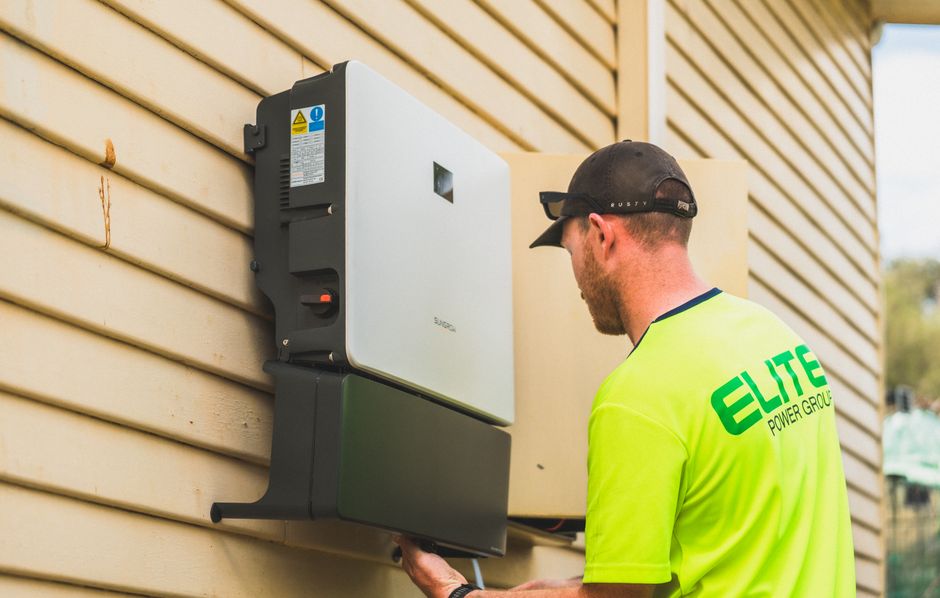
A 6.4 kW panel rating is DC capacity measured under laboratory conditions, not a promise of 6.4 kW of AC power at every moment. A 4.8 kW peak can be normal when the inverter is rated near that output, panels are hot, sunlight falls below test conditions, or the array is oriented away from peak sun. The production graph and the system's DC-to-AC ratio separate normal clipping from a fault.
Why is my 6.4 kW solar system only producing 4.8 kW?
It can be normal. The number on the panels and the number delivered as AC power measure different parts of the system.
Panel capacity is normally stated in kilowatts DC. The inverter converts that DC electricity into the AC electricity used by a home or sent to the grid. If a 6.4 kW DC array is paired with an inverter that tops out near 4.8 kW AC, the inverter creates a ceiling. The system can reach that ceiling on bright days without being broken.
The National Renewable Energy Laboratory calls the relationship between array DC rating and inverter AC rating the inverter loading ratio, also called the DC-to-AC ratio. PVWatts Version 5 uses a default DC-to-AC ratio of 1.1. Its example shows that a 4 kW DC array at that ratio uses a 3.63 kW AC inverter. The design puts more panel capacity behind the inverter, gaining output in weaker morning and late-day light while accepting some lost power around the daily peak.
The panel label also describes a narrow test point. The U.S. Department of Energy says module ratings use 1,000 W/m2 of sunlight and a 25 C cell temperature. Real sunlight often falls below that irradiance, and working cells are commonly hotter. A clear afternoon can still produce less than the nameplate rating.
| What you see | What it often means | What to compare |
|---|---|---|
| Output stops near the inverter's AC rating | Normal clipping | Inverter nameplate and clear-day graph |
| Peak shifts with heat, season, or cloud cover | Normal operating conditions | Weather, array temperature, and prior comparable days |
| Output drops well below its prior pattern in stable sun | Possible fault or shading issue | Installer estimate, monitoring history, and equipment status |
The useful comparison is not 6.4 versus 4.8 alone. It is panel DC rating, inverter AC rating, site conditions, and the energy produced across days and months.
Is it normal for solar panels to never reach their rated wattage?
Yes. Rated wattage is a standardized measurement, while a roof operates in changing light and heat.
Time of day, season, sun angle, and local climate all change available solar resource. Cloud cover adds a less predictable layer. The Department of Energy also states that module efficiency degrades at about 0.5% per year. A single high reading is a snapshot. A weather-aware production pattern is the record.
Temperature has a direct role. The NREL PVWatts Version 5 Manual uses temperature coefficients of about -0.47% per degree C for its standard-module assumption and -0.35% per degree C for its premium-module assumption. Those model assumptions show why a hot, bright day does not automatically create a nameplate-power day.
Array geometry matters as well. Tilt and azimuth determine how directly sunlight reaches the modules at different hours and seasons. A roof designed for yearly energy does not need to produce its highest possible number at solar noon. Energy is the harvest. Peak power is one moment in the field.
Use the estimate supplied with the installation as the first benchmark. Then compare monthly and annual production against a model that includes local solar resource, temperature, system age, and system characteristics. This is the same discipline behind learning personal finance without falling for bad advice: inspect the assumptions before trusting the headline number.
How can I tell whether my inverter is clipping solar production?
Clipping appears as output that rises with the sun and then levels into a flat ceiling at or near the inverter's AC rating.
NREL defines clipping as the inverter limiting output when array power would exceed the inverter's maximum rated input. On a clear day, that flat section can last for several continuous hours. On variable days, it can appear as short high-irradiance spikes. A level top near the same AC number is the key sign. A jagged or declining graph far below that ceiling points elsewhere.
Start with four checks.
- Find the inverter's AC rating in the equipment documents or monitoring portal.
- Find the array's DC nameplate rating and divide DC by AC to identify the DC-to-AC ratio.
- Review several clear, unshaded days rather than one cloudy day.
- Compare energy totals with the installer estimate and a weather-aware benchmark, not only the highest instantaneous kW reading.
Clipping is expected only when enough sunlight reaches the array to exceed the inverter limit. It does not explain low output throughout the day, frequent inverter trips, or a new shortfall against comparable clear days. The DOE Solar PV Post-Evaluation Checklist recommends testing under stable, unshaded conditions with irradiance of at least 400 W/m2 and recording irradiance, ambient temperature, and array temperature. Raw output alone cannot settle the question.
For string systems, that checklist says equal strings with the same tilt and azimuth should have maximum-power-point current within 0.1 A under consistent weather. A string outside that range should be checked for shading or a ground fault. It also calls for confirming inverter readings with independent meters and checking AC output monthly near solar noon on a clear day.
Call the installer when a repeated, comparable-condition check shows a persistent gap from the modeled expectation; when monitoring reports an inverter trip or error; or when the graph departs from its prior seasonal pattern. DOE guidance on operating existing PV systems identifies faulty connections, inverter tripping, wire faults, and loss of power performance as possible failures. It also advises inspection after nuisance trips for ground faults instead of repeatedly resetting the system.
A clipped peak is a ceiling by design. A weak day-long curve is a question that needs evidence.
Frequently Asked Questions
Does hot weather reduce solar panel output?
Yes. The Department of Energy states that modules are rated at a 25 C cell temperature, while operating cells are typically hotter. PVWatts uses temperature coefficients of about -0.47% per degree C for its standard-module assumption and -0.35% per degree C for its premium-module assumption.
When should low solar production make me call my installer?
Call when output stays below the expected weather-aware model over repeated comparable periods, when monitoring shows inverter trips or errors, or when the system no longer follows its established pattern. DOE guidance also calls for inspection after inverter nuisance trips for ground faults, rather than repeatedly resetting the system.
Sources
- U.S. Department of Energy, Optimizing Solar Photovoltaic Performance for Longevity
- National Renewable Energy Laboratory, PVWatts Version 5 Manual
- National Renewable Energy Laboratory, The Effect of Inverter Loading Ratio on Energy Estimate Bias
- U.S. Department of Energy, Solar PV Post-Evaluation Checklist
- U.S. Department of Energy, Operate and Maintain an Existing Photovoltaic System